



Madikwe Hills Bush Bulletin | October 2026
From jackal pups and dung beetles to birds in breeding plumage, this Bush Bulletin explores the latest wildlife stories from Madikwe. We also meet a young leopard who loves an audience and welcome Blondie back to the east.
Jackal Pups Everywhere
There is something special about seeing a black-backed jackal on a game drive, but spotting one of their pups is an entirely different experience.
As we move into the warmer months, young jackals become increasingly noticeable around Madikwe. After spending much of their early lives close to the den, pups gradually become more adventurous, venturing further from their hiding places as they develop the skills they will need to survive.
Jackal pups are highly dependent on their parents during these early months. Adults bring food back to the den, while the pups spend their time playing, exploring and learning. These seemingly harmless games are actually an important part of growing up, helping young jackals develop coordination and social skills that will eventually become essential for hunting and avoiding danger.
Black-backed jackals are incredibly adaptable predators and will take advantage of almost any food source they can find, from insects and small mammals to birds, reptiles and carrion.
So, if you have been seeing little jackals darting around the roads lately, keep an eye out. Those tiny pups are already learning how to become some of the bush’s most resourceful little predators.
The Return of the Dung Beetles
With the return of warmer temperatures and summer rains comes the return of one of the bush’s hardest-working recyclers — the dung beetle.
For much of the cooler, drier season, dung beetle activity can become noticeably quieter. Once conditions become warmer and moisture returns to the soil, however, these remarkable insects become increasingly active.
Dung beetles have an incredibly important job. They locate fresh dung, often finding it remarkably quickly, and use it as both food and a nursery for their young. Some species roll pieces of dung into balls and bury them underground, while others work directly beneath a dung pile.
Their work may not sound particularly glamorous, but it is vital to the health of the ecosystem. By burying dung, dung beetles return nutrients to the soil, improve soil structure and help disperse organic matter. They also play a role in reducing the amount of dung left on the surface.
Next time you see a dung beetle busily rolling a ball of dung across the road, take a moment to watch it. What looks like a small insect doing a rather unpleasant job is actually an important part of keeping the bush healthy.
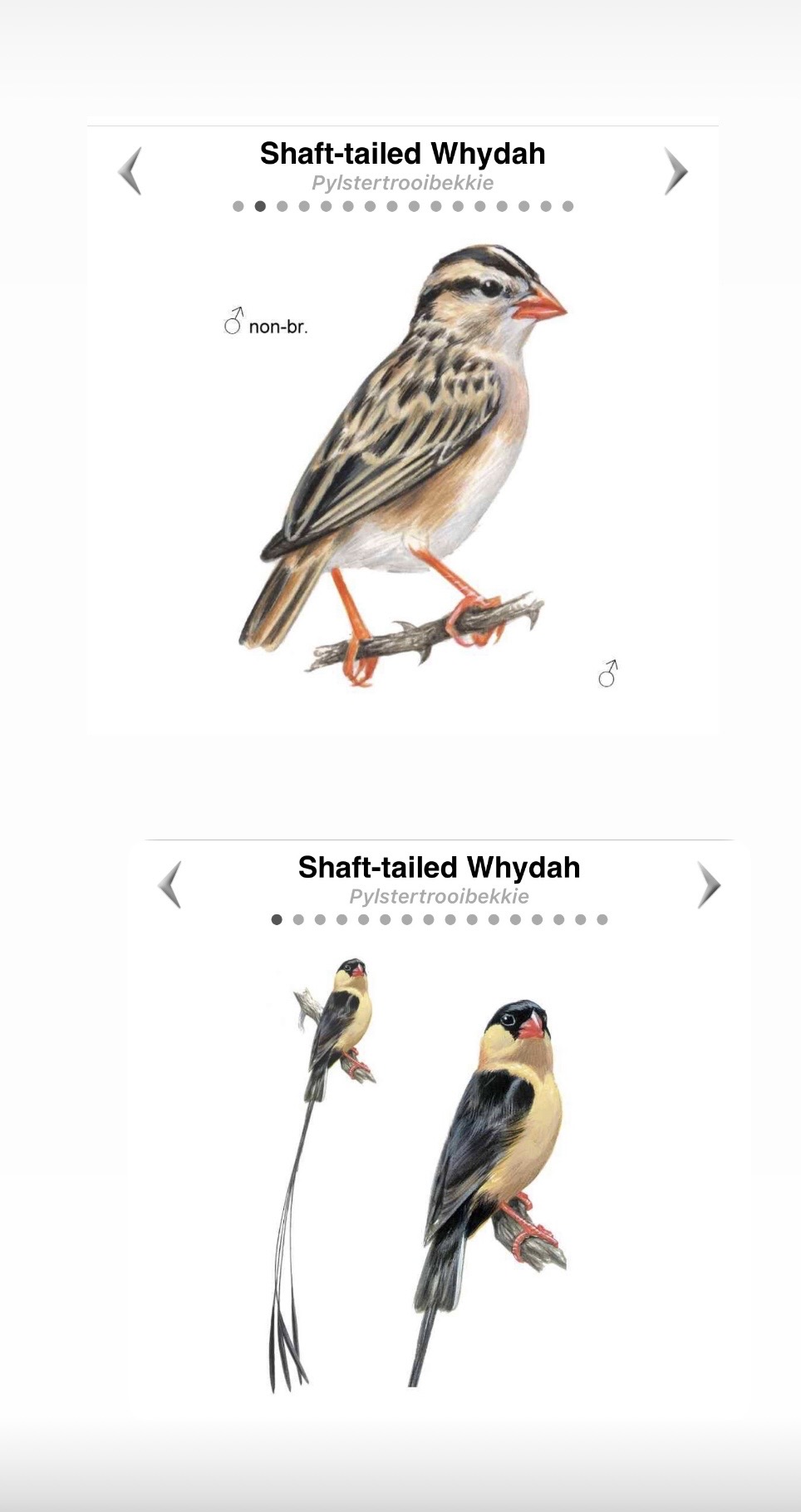
Dressing for the Breeding Season
One of the most noticeable changes taking place in the bush as summer approaches can be seen overhead.
Many of our summer birds are beginning to change into their breeding plumage, with males becoming noticeably brighter and more colourful as they prepare for the breeding season.
For many bird species, appearance plays an important role in attracting a mate. Brighter colours, longer feathers and more elaborate markings can all help males advertise their condition and attract females.
These changes are particularly exciting for birders because some species can look dramatically different during the breeding season compared with the rest of the year. What may have appeared to be a fairly ordinary-looking bird a few months ago can suddenly become one of the most striking animals in the bush.
It is also a reminder that the seasons in the African bush are not simply about changes in temperature and rainfall. They influence behaviour, breeding, migration, feeding and even the appearance of the animals around us.
So while we are watching the bush turn green, remember to look up. Some of our feathered residents are quite literally dressing up for summer.
The Leopard Who Loves an Audience
Madikwe has no shortage of leopards, but every now and then, one comes along that seems determined to make a name for himself.
Recently, a young male leopard has been giving some incredible sightings around the Boscia Pan and Marula Road areas. Unlike many leopards, which can disappear into the bush almost as quickly as they are found, this young male seems remarkably comfortable around the game-viewing vehicles.
On some sightings, vehicles have been able to drive alongside him as he casually moves down the road. Even more impressively, his relaxed behaviour often means that multiple vehicles get the opportunity to enjoy the sighting, with guests catching glimpses of him as he disappears around one corner only to appear again further along the road.
For returning guests and guides who know Madikwe well, this leopard has already started to make quite a reputation for himself. He certainly doesn’t seem to follow the usual leopard rule of “see me for five seconds and then never find me again.”
Of course, as a young male establishing himself, his story is only just beginning. Where he eventually settles, which areas become his territory and how his behaviour changes as he matures are all still to be seen.
For now, though, he has become one of those special Madikwe characters that guests will remember — the young leopard who, for whatever reason, seems perfectly happy to put on a show.
The Return of Blondie
For those who have spent years exploring the eastern side of Madikwe, the name Blondie will bring back plenty of memories.
There was a time when Blondie and Dark Mane ruled this part of the reserve. Eventually, Dark Mane was killed by his own son, and two new males, Addo and Matata, moved in and established themselves as the dominant lions of the east.
Blondie, however, was not quite finished with Madikwe.
As the new males took control, Blondie was pushed out of the area and spent much of his time on the private concession across the river. He would occasionally cross back into Madikwe, often accompanied by a few lionesses from the Kwena Pride, before disappearing across the river again.
For many of the guides, guests and old Madikwe hands who remember him, Blondie’s absence from the east has always been noticeable.
But recently, something interesting has been happening.
Blondie has been seen back on the eastern side with his familiar females, and on several occasions they have been found around wildebeest carcasses. More importantly, these sightings have continued over multiple days.
Whether this is simply a temporary visit or the beginning of something more significant remains to be seen.
But for those who remember the old days, seeing Blondie back in the east — with his females beside him — is certainly enough to get people talking.
Perhaps an old king has decided to pay his former kingdom another visit.